ELPIT-2025 International Congress Concludes
Polytechnic served as one of the organizers of a large environmental foru
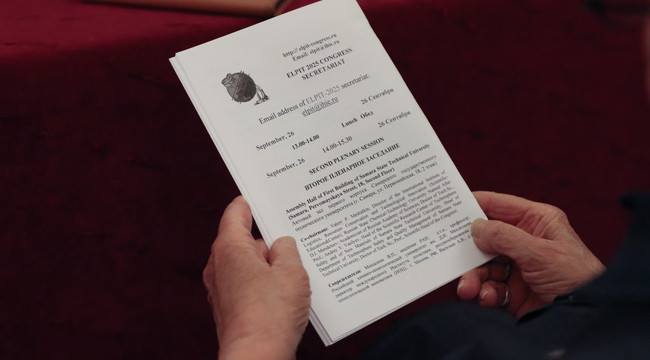
From 24 to 27 September, the Samara region hosted the International Environmental Congress “Ecology and Life Safety of Industrial and Transport Complexes” (ELPIT-2025). It brought together more than 500 participants — executives and leading specialists from industrial enterprises, representatives of public environmental organizations, and leading scientists from various regions of Russia and abroad. As usual, Samara Polytechnic was one of the main organizers of the scientific meeting. The chairman of the organizing committee was our university’s rector, Dmitry Bykov; co-chair and scientific director of the congress was Andrey Vasiliev, Head of the Department of Technosphere Safety and Quality Management at the Polytechnic. The event’s special guest was Gianguido Breddo, Honorary Consul of the Italian Republic in Samara Region and the Republic of Tatarstan. The congress partner was PJSC KuybyshevAzot.
“ELPIT has already become a traditional event for ecologists. It is a platform for meetings and exchanging experience. The congress aims to bring together scientists and practitioners, give young people the opportunity to present their scientific achievements and even make a first step into science,” emphasized Andrey Vasiliev. “We are not only focused on discussing local issues, but also considering global problems. The congress included academicians of the Russian Academy of Sciences and well-known scientists. Following the events, decisions will be made and conference proceedings published.”
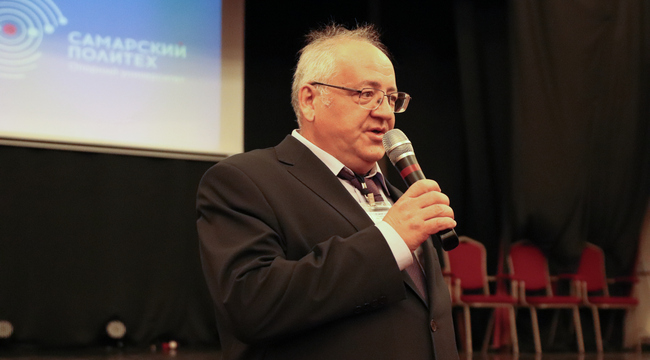
ELPIT was again held in two cities: experts gathered in Togliatti at the PJSC KuybyshevAzot venue, and in Samara at our university. The forum program included large plenary sessions and scientific symposia with online participation from experts in other cities, as well as the Young ELPIT scientific-innovation forum for young scientists.
On 26 September, experts discussed current issues of environmental safety and urban ecology, biotic components of ecosystems, and problems of environmental monitoring of industrial and transport complexes in the Polytechnic’s main building. In addition, prominent scientist and RAS academician Valery Meshalkin delivered a lecture titled “Engineering of energy- and resource-efficient, environmentally safe chemical-technological systems and the logistical structure of industrial clusters — an important factor in the scientific and technological development of the Russian Federation.”
The next day, the university’s concert hall hosted the Young ELPIT innovation forum for young scientists. Participants presented scientific reports and innovative projects to the commission on environmental protection and life-safety topics. As a result, Polytechnic representatives won in two categories: among schoolchildren, Matvey Chervov from our architectural-technical lyceum took first place; among students, Alice Umerova from the Faculty of Architecture and Design was unbeatable.
“The congress is devoted to one of the Polytechnic’s key scientific directions — industrial ecology and chemical technology,” noted Anton Yeremin, Vice-Rector for Research. “Today the chemical sector and environmental safety issues are the themes with which our university is associated at the federal level. Therefore it is very important that ELPIT attracts great interest from students.”
Recall that the tradition of holding ELPIT conferences was established in 2003. Since then, the meetings have been held every two years. In 2007 ELPIT received the status of an international environmental congress. Today it is one of the largest environmental events in Russia, promoting the idea of careful treatment of the environment and ecological culture.
Photo
by Ksenia Murchenko