Polytech Expert on the Demand for FIAT Technologies in the USSR
Elena Prokofieva took part in an international research project
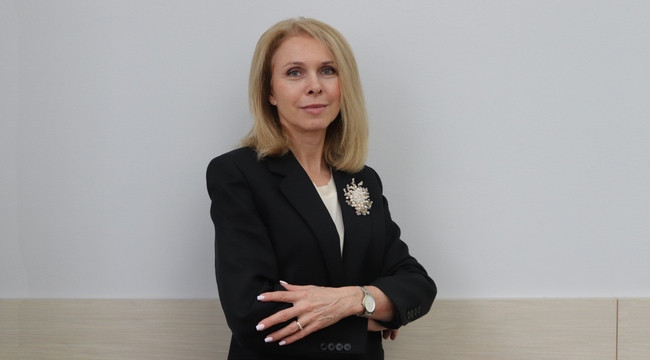
Historians Elena Prokofieva (Samara Polytech), Elena San Román and Jorge Hernández-Barahona (Complutense University of Madrid), as well as Valentina Fava (Ca’ Foscari University of Venice), have published the results of a comparative study explaining how the technologies of the transnational Italian corporation FIAT supported the automotive industries of Spain and the USSR during the period of political isolation of these states in the 1940s–1960s (in Spain – due to the alliance with fascist powers during the Second World War, in the USSR – due to the ideological confrontation with the capitalist West). The researchers demonstrated that in both cases isolation did not mean exclusion, but rather a controlled form of global interaction – an attempt to obtain foreign technologies and industrial knowledge without renouncing political autonomy.
The results of the study were published in the journal Business History.
The strategy of rapid post-war industrialisation in the automotive sector of Spain led to the creation of SEAT (Sociedad Española de Automóviles de Turismo), and in the Soviet Union – to the establishment of VAZ.
“The political regimes in neither country possessed the technological and organisational capabilities for independent mass production of automobiles,” says Elena Prokofieva, professor at Polytech’s Department of Philosophy and Social Sciences and Humanities, “so they turned to FIAT for support. At the same time, both the Spanish and Soviet governments faced internal resistance – they needed to convince national elites of the necessity of foreign technologies and find an ideological justification for this under conditions of sanctions and embargoes.”
Based on a scrupulous analysis of documents from Spanish, Italian and Russian archives, the scholars concluded that the FIAT corporation played an exceptional role not only in the creation of flagship national automotive companies in Spain and the USSR, but also in easing the international political isolation of these states.
As early as the 1920s, the Italian automaker had focused on creating a diverse product line adapted to various export markets. By the mid-1930s, FIAT began producing inexpensive cars for countries with low motorisation. This experience allowed the company to quickly restore its foreign presence in the post-war era in countries where FIAT’s capabilities could secure a dominant technological role.
“The choice of the Italian automaker as the USSR’s industrial partner in the construction of the Volga Automobile Plant in the 1960s was not a spontaneous decision,” says Elena Prokofieva. “FIAT products had been imported into the Soviet Union already in the late 1920s, and FIAT equipment accounted for more than 19 percent of total USSR imports from Italy. In 1931, the Italian automaker signed a contract with the Soviet Union to build a ball-bearing factory in Ukraine.”
In 1958, the first Italo-Soviet commercial agreement was signed, and in October 1960, an agreement was reached on possible cooperation in automobile manufacturing. However, it was only on May 4, 1966, in Turin that USSR Minister of Automotive Industry Alexander Tarasov and FIAT President Vittorio Valletta signed the final protocol on the Italian corporation’s participation in the construction of VAZ. From 1966 to 1971, FIAT supplied the Soviet Union with licences and equipment and provided technical assistance for the production of an adapted version of the Fiat 124 model (the future “kopeyka”, VAZ-2101).
By concluding the deal with the USSR, FIAT emerged victorious in tough competitive struggle. In the 1960s, many European companies were interested in cooperation with the USSR, whose demand for high-tech equipment and reputation as a reliable debtor made it an attractive partner. FIAT’s success was explained by the management’s ability to adapt to favourable political circumstances and coordinate actions with other Italian firms that were simultaneously negotiating with the Soviet leadership, primarily in the engineering sector, in order to gain an advantage over competitors from other countries.
Historians believe that by offering Soviet partners a wide range of equipment and industrial goods, the Italians indulged the ambitions of the USSR leadership. The agreement with FIAT became a kind of triumph for the reformist strategy of the Soviet government under Alexei Kosygin, which was based not only on the concept of peaceful competition between the communist system and capitalism, but simultaneously on the idea of the accessibility of consumer goods and the significant role of technology in the development of Soviet society and the economy.